Funerals & Celebrations of Life
A life worth remembering.
Every life is different. Every relationship is different. And every farewell should be too.
I create meaningful ceremonies shaped around the person, the stories they leave behind and the people who knew and loved them.
More than a farewell
An opportunity to remember someone properly.
Not simply their dates, achievements or the facts of their life, but the person behind them.
The parent. The partner. The grandparent. The sibling. The friend.
The stories they told. The things that made people laugh. The things they loved. The little habits everyone remembers. The moments that still make you smile.
Those are the things that make someone unmistakably themselves.
And those are the things that can make a ceremony feel truly personal.
Getting to know them
It starts with listening.
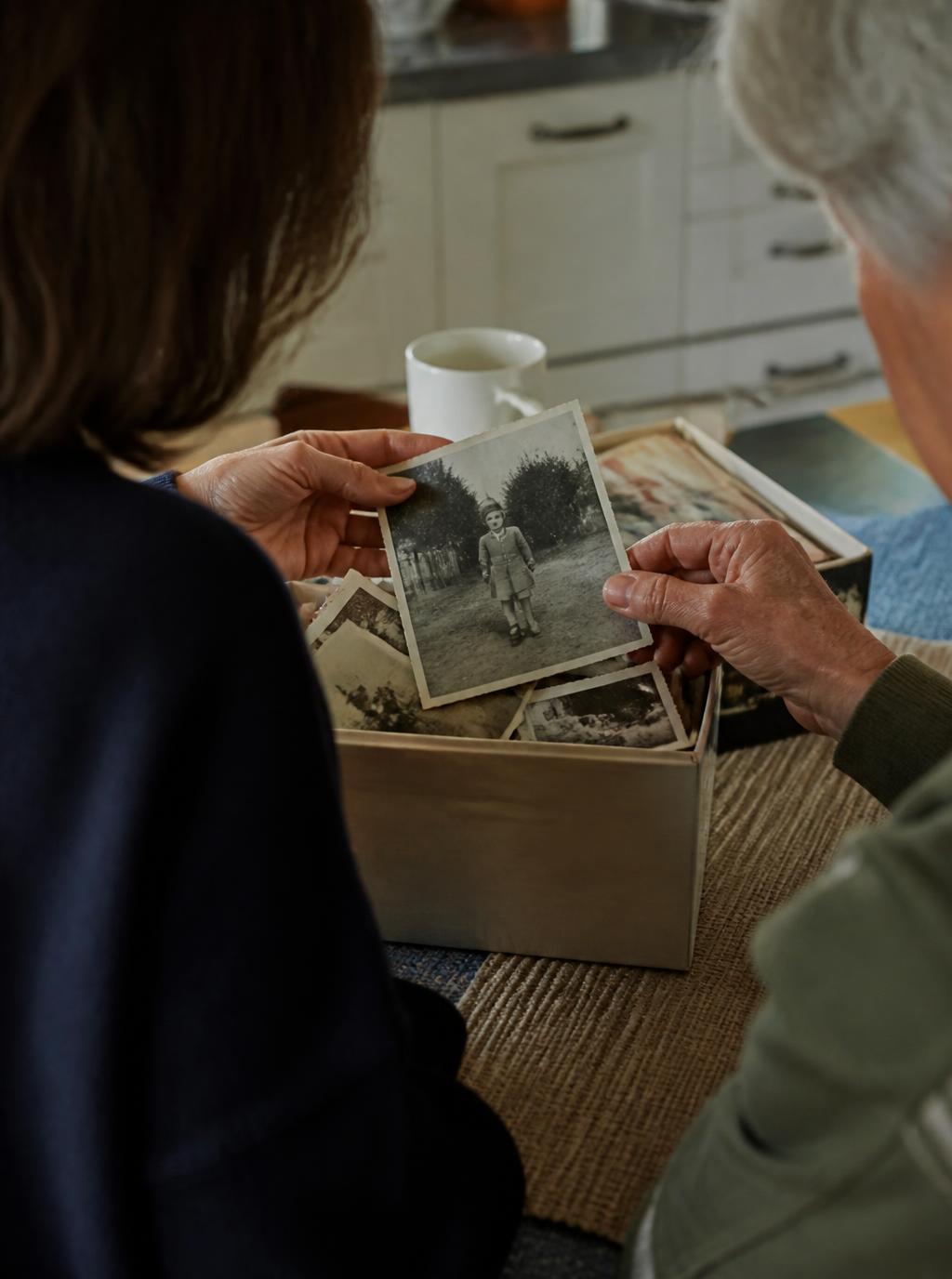
Before I can create a ceremony, I need to understand the person it is about. That starts with conversation.
I’ll take the time to listen to the people who knew them — their family, friends and the people who mattered most.
We’ll talk about their life, their personality, their relationships, the memories that stay with you and the things that made them who they were.
Some of those details may become part of the ceremony. Others may simply help me understand them better.
That’s all part of creating something that feels natural, honest and genuinely personal.
What can we include?
What belongs in the ceremony?
There isn’t a fixed formula. The ceremony can include whatever feels right for the person being remembered and the people gathered to remember them.
- Their life and story
- Personal memories and anecdotes
- Family and friends
- Readings, poems or letters
- Music that meant something to them
- Personal tributes
- Cultural or religious traditions
- Moments of reflection
- Humour, where appropriate
- Stories from different stages of their life
- Personal rituals or symbolic moments
Sometimes the most meaningful details are the smallest ones.
The people who make the memories
A ceremony doesn’t have to be carried by one voice.
Family and friends can share memories, readings, stories, letters, music or personal tributes.
If someone wants to say something but isn’t sure how, I can help them find the words.
My role is to bring those different voices together and create a ceremony that feels coherent, natural and true to the person being remembered.
And if someone doesn’t feel able to speak themselves, that’s completely okay too.
Real lives aren’t always simple
Not every life can be summed up neatly.
Relationships can be complicated. Families can be complicated. People can be complicated. A meaningful ceremony doesn’t have to pretend otherwise.
It can acknowledge the complexity of someone’s life while still creating a respectful, thoughtful and meaningful moment for the people who are there.
There is no need to turn someone into a version of themselves that never existed.
The ceremony should simply help people remember them as they really were.
The Moment Method™
A ceremony created with care.
Every meaningful ceremony starts with understanding. The Moment Method™ gives us a simple way to move from conversation to ceremony — listening carefully, understanding what matters, creating something personal and delivering it with care.
01
Listen
Start with their story.
We begin with conversation. Time to hear about the person, the people around them and the memories that matter.
02
Understand
Find what really matters.
The details, relationships, memories, personality and moments that help reveal who they really were.
03
Create
Turn those memories into a ceremony.
I bring everything together into words, moments and a ceremony that feels personal, meaningful and true to them.
04
Deliver
Be there when it matters.
On the day, I'll guide the ceremony, hold the room and create the space for everyone to be present in the moment.
Working together
From first conversation to the ceremony.
You don’t need to know exactly what you want the ceremony to be.
You don’t need to have the right words.
We can start simply by talking about them.
- 01Initial conversationA chance to talk, ask questions and tell me a little about the person you're remembering.
- 02Getting to know themWe explore their life, relationships, memories and the details that made them who they were.
- 03Creating the ceremonyI shape everything we've shared into a ceremony that feels personal and meaningful.
- 04Reviewing and refiningWe take the time to make sure the ceremony feels right.
- 05The ceremony itselfI'll be there to guide everything, hold the room and give everyone the space to remember.
However it needs to be
A ceremony can be personal in many different ways.
- Religious
- Non-religious
- Spiritual
- Secular
- Traditional
- Contemporary
- Intimate
- Larger gatherings
The important thing is that the ceremony reflects the person and the wishes of those involved.
Questions
You might be wondering...
Absolutely. The ceremony is created around the person being remembered and the people who knew them.
Yes. They can contribute memories, readings, music, letters, tributes or stories. And nobody has to speak if they don't want to.
Yes, where it feels appropriate. A person's sense of humour can be an important part of remembering who they really were.
That's completely okay. You don't need to arrive with a plan. We can start with a conversation and work things out together.
Yes. If particular traditions, prayers, readings or rituals are important to the person or their family, we can talk about how they can form part of the ceremony.
That's something we can talk through. My role is to listen carefully, understand what's important to everyone and help shape a ceremony that feels respectful and appropriate.
Let’s Talk
When you’re ready, let’s talk.
You don’t need to have everything figured out.
You don’t need to know exactly what the ceremony should look like.
We can start simply by talking about them, remembering them and thinking about what would feel right.